🚨 Decision Point #9

Recharge for Re-Entry?

⚠️ The Situation

  • Re-entry — the one part the LM lifeboat can't help with — is about 30 hours away
  • During the post-explosion scramble, the dying Command Module ran on its re-entry batteries — battery A lost about half its charge (~20 of 40 amp-hours)
  • The CM's three entry batteries now hold about 99 of their ~120 amp-hours. A normal re-entry uses roughly 70–80
  • The math works — barely. No cushion for a longer timeline, an extra system draw, or one weak battery
  • In Houston, flight controller John Aaron's power team has an idea nobody designed for: push electricity backwards through the docking umbilical, letting the LM's descent batteries refill CM battery A

The Twist:

The umbilical linking the two ships was built to send power the other way — from the CM, keeping the docked LM warm on the way to the Moon. Reversing it has never been tried. Not in space. Not in a simulator. Not anywhere.
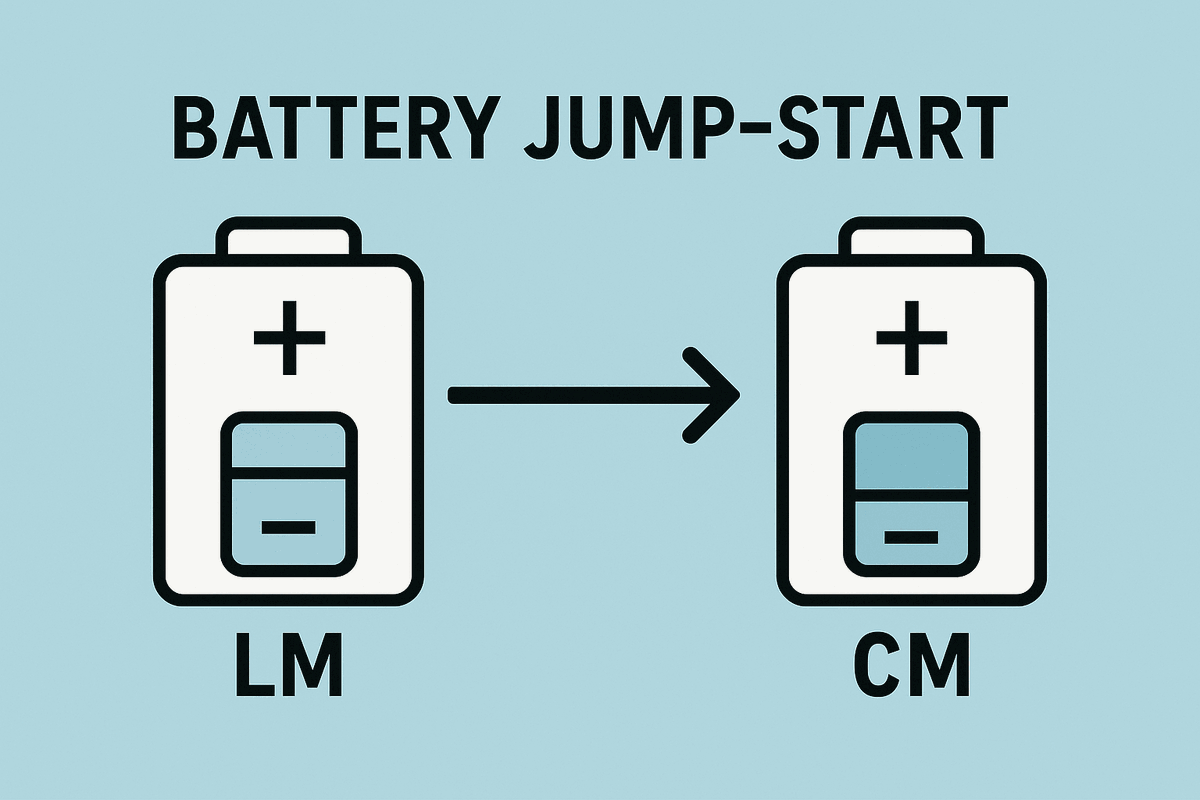
Apollo electrical system and battery connections between the LM and Command Module
Two spacecraft, one cable — never designed to carry charge from the LM to the CM

⚡ CHARGE FROM THE LM

Trickle-charge CM battery A from the LM's descent batteries — a procedure invented this week

✓ Advantages

  • The CM would hit re-entry with essentially full batteries — real margin for surprises
  • Uses hardware already connected: no spacewalk, no new wiring
  • The crew's brutal power-down left the LM batteries ahead of budget — power to spare
  • Aaron's team has already drafted the procedure and checked the numbers

✕ Disadvantages

  • Never designed for, never tested — anywhere
  • Spends LM battery power the lifeboat still needs for the next ~29 hours
  • Slow and inefficient: about 15 hours of charging
  • A wiring fault could damage both ships' electrical systems at once

🔋 FLY WITH REDUCED MARGIN

Skip the experiment — 99 amp-hours should cover a normal re-entry

✓ Advantages

  • No untested procedure — zero chance of an electrical fault touching two ships
  • Every amp-hour stays in the lifeboat, where the crew is living
  • On paper, ~99 amp-hours covers a normal 70–80 amp-hour re-entry

✕ Disadvantages

  • Only ~20 amp-hours of cushion — and nothing on this mission has gone to plan
  • No room for a longer re-entry timeline or an unexpected system draw
  • Battery A stays half-empty; one battery hiccup and the margin is gone
  • Once the LM is cut loose, there is no second chance to charge

🤔 WHAT SHOULD MISSION CONTROL DECIDE?

👆 Choose one of the options above 👆