The Long Cold Journey Home
Two and a Half Days From Home
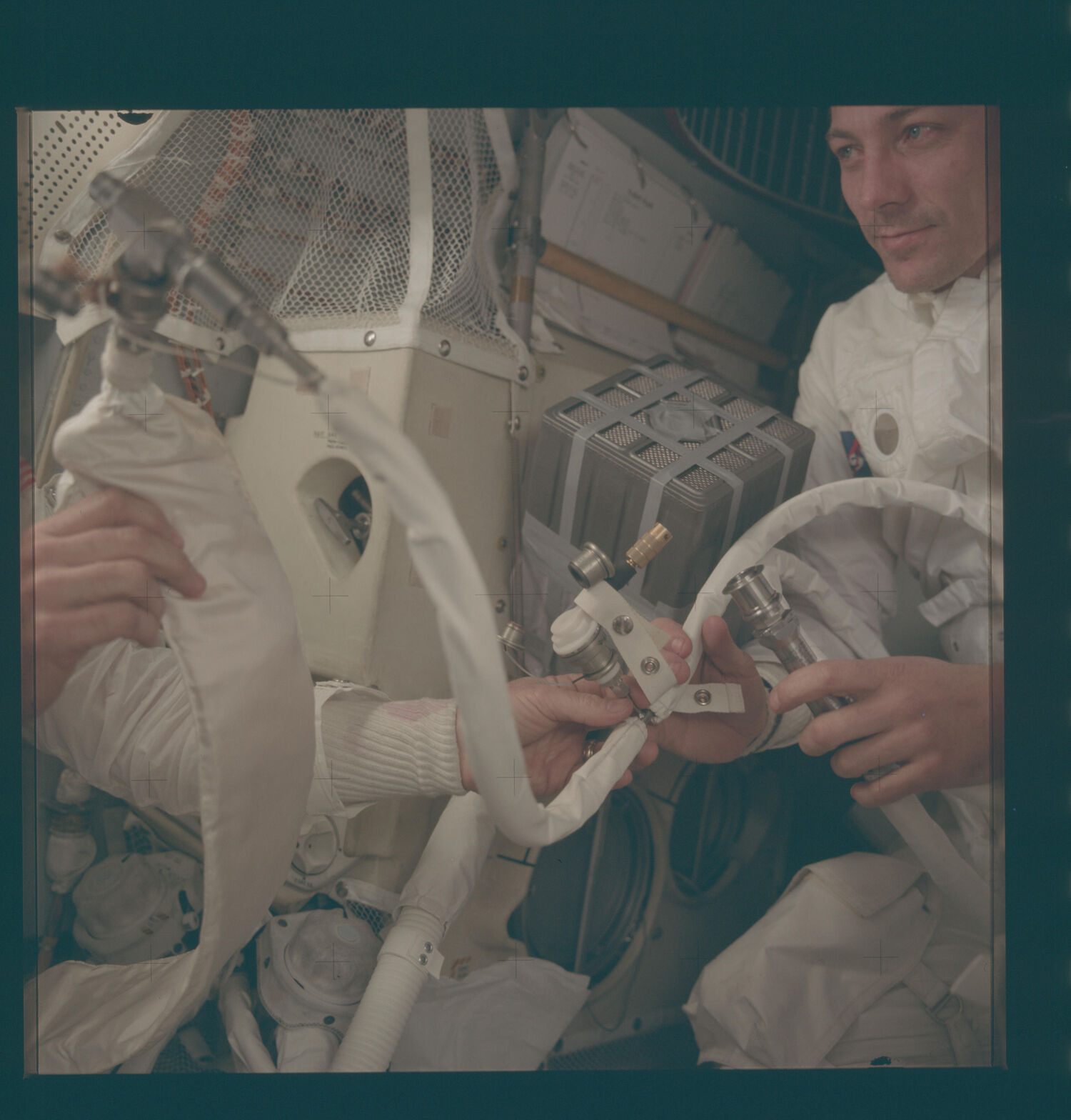
The PC+2 burn—fired two hours after Apollo 13 rounded the Moon—put the crew on course for Earth. But splashdown was still about 63 hours away. For two and a half more days, three men had to survive in a two-man lunar lander with almost everything switched off.
Remember: the first two days of the mission had been easy, routine flying. The ordeal began when the oxygen tank exploded late on Day 3—and it wouldn't let up until splashdown, about three and a half days later.
🥶 The Cold
To save every amp of battery power for re-entry, Mission Control ordered nearly all heaters and electronics shut down. Without its systems running, the spacecraft slowly gave up its warmth to space.
- Lunar Module Aquarius (where the crew lived): about 49-50°F—like living inside a refrigerator
- Powered-down Command Module Odyssey: about 38°F, with water droplets condensing on the walls, windows, and instrument panels
The crew could see their breath. They pulled on extra layers of underwear, and Lovell and Haise wore their lunar overshoes. Jack Swigert had no overshoes—he was never scheduled to walk on the Moon—and he had gotten his feet wet while filling water bags.
"We were as cold as frogs in a frozen pool, especially Jack Swigert, who got his feet wet and didn't have lunar overshoes." — Jim Lovell, "Houston, We've Had a Problem" (NASA SP-350)
💧 The Thirst
You already made the water call at Decision Point #6: six ounces per man per day, so the cooling water would last until re-entry. Now the crew had to live with it. Slow dehydration meant headaches, dry mouths, and fading energy—by splashdown the three men had lost over 30 pounds between them.
Fred Haise got the worst of it. He developed a urinary tract infection—the dehydration likely didn't help—and a fever that climbed to about 104°F around splashdown. Burning up and shivering at the same time, in a 50-degree cabin.
😴 The Exhaustion
Sleep nearly vanished. The Command Module—the usual bedroom—was too cold to rest in, and in the cramped LM someone was always awake, working a checklist or talking with Houston. Rest came in short, shivering snatches.
Flight surgeons on the ground listened to the crew's voices grow slower and flatter, and worried about the real danger: exhausted people make mistakes—and the hardest flying of the whole mission, re-entry, still lay ahead.
⏳ The Long Wait
Current Status:
- 🥶 Temperature: ~50°F in the LM, 38°F in the CM
- 💧 Water: 6 oz per man per day
- 🤒 Crew: exhausted and dehydrated; Haise running a fever
- 📍 Earth: closer every hour—about two days to re-entry
They are suffering. But they are alive.
The crew endured conditions that would break most people.
And Mission Control was working around the clock to bring them home.