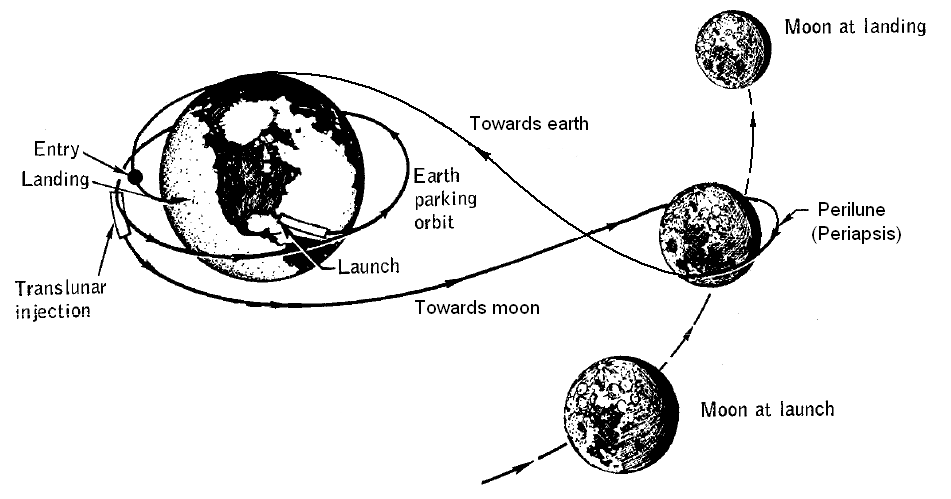
✓ FREE-RETURN TRAJECTORY
At GET 61:29:43, the crew fired the Lunar Module descent engine for about 34 seconds to put Apollo 13 back on a free-return trajectory - a path that would loop behind the Moon and use lunar gravity to slingshot them back to Earth.
Why NASA chose FREE-RETURN:
- Safer approach that wouldn't stress already damaged systems
- Used the undamaged LM descent engine instead of the Service Module's SPS engine, which sat right next to the explosion damage
- Kept the LM lifeboat — a direct abort would have meant jettisoning it and betting everything on the possibly damaged SPS
- Conserved critical fuel for later course corrections
- Proven technique from previous Apollo missions
- Required patience, but minimized risk of catastrophic failure
"Let's solve the problem, but let's not make it any worse by guessing."
— Gene Kranz, Flight Director, to his controllers on the night of the accident
Outcome: The free-return trajectory worked perfectly. Apollo 13 swung around the Moon and headed back toward Earth, giving the crew a chance at survival. The conservative choice saved lives.
📚 Sources for Skeptics
Would you have gambled on the fast way home? Arguing with the answer
is exactly what good engineers do. Check the mission record yourself: